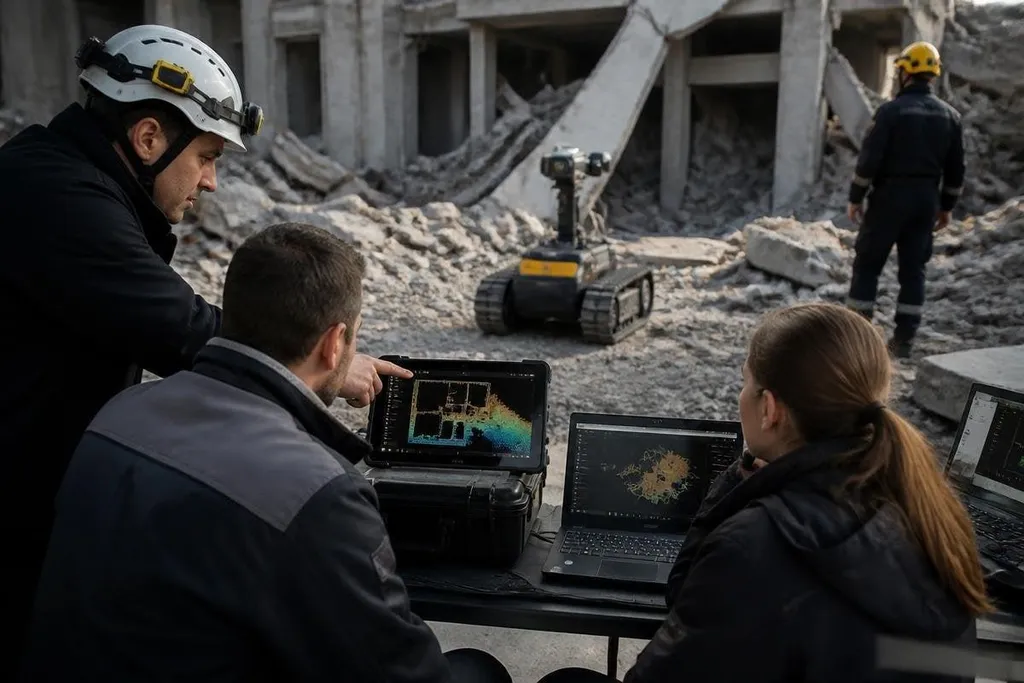
A search-and-rescue robot may enter a collapsed building before a person does, but the sale rarely ends with the machine. Training, remote operation, repairs, mapping, and data handling can matter just as much to the buyer.
That changes the business question. The opportunity sits in the full service around the robot, not only in the robot’s frame, sensors, and drive system.
- Fire services can use ground robots to inspect unsafe spaces before sending people inside.
- Drone teams can map flood zones, fires, and damaged roofs from above.
- Mines and utilities can pay for inspection work without buying a full robot fleet.
The machine is only one part of the sale
A rescue robot needs more than motors and cameras. A ground unit may carry LiDAR, a thermal camera, a radio link, and an arm for moving light objects. LiDAR measures distance with laser pulses, while thermal cameras show heat that ordinary cameras miss.
Those parts create several lines of work. A company can sell the robot, fit new sensors for a specific site, train operators, and keep the system ready for use. The buyer may be a fire service, mine operator, utility, insurer, or government agency, and each one needs a different setup.
A mine may care about gas sensing and radio range underground. A fire service may need thermal images, stair-climbing ability, and a control unit that works with gloves. An insurer may want aerial images and mapped damage after a storm.
The same base robot can serve these jobs only if the maker supports sensor changes, software updates, and repair work.
That gives smaller firms a place in the market: they can build payloads, control stations, mapping software, or replacement parts without making the whole robot.
Service work may be easier to buy
Many rescue agencies won't need a robot every day. That makes a service contract or paid response team easier to justify than a purchase sitting in storage between emergencies.
A service company could bring trained operators, spare batteries, a drone, and a ground robot to a site. It could then charge for planning, field work, data processing, and a report that the agency can use after the response.
This model also fits buyers with uneven demand. A utility may call for a robot after a tunnel fault or storm. A building owner may hire a team to inspect a damaged structure before engineers enter. A mine may arrange regular checks in areas where dust, heat, or gases raise the risk for people.
The work still has limits. A robot may lose its radio link behind thick concrete, struggle over broken stairs, or run out of battery before an operator finds a safe route. A service company must price those failures into its plan, rather than treating a clean demonstration as proof of field performance.
A rescue robot can leave behind more than a video feed. Its map, radio log, battery record, and operator actions can form a paid data service for emergency teams, insurers, or building owners. A buyer can use Robot24 to follow the machine, trial date, and reported result before deciding if that data has value beyond the robot sale.
Data creates another revenue line
Search-and-rescue robots can collect thermal images, 3D maps, video, gas readings, and location data. The data may help a response team choose a safer route or show where a structure has shifted.
That creates work after the robot leaves. A company can clean the data, mark hazards on a map, store records for later review, and connect the output to an agency’s existing incident system.
The buyer pays for a usable report, not a folder of raw video. Data rules matter here because images from a damaged home may show people, private documents, or medical details.
A provider needs clear retention periods, access controls, and a process for deleting files when the response ends.
Where new firms can enter
The hardware market may draw the most attention, but smaller businesses can serve the same work through sensor kits for heat, gas, radiation, or poor-visibility sites. Other openings include operator training for fire crews, mine teams, and utility staff, plus repair, battery replacement, and checks between deployments.
Mapping software can turn robot data into site plans. Paid response teams can serve buyers with occasional need, while insurance and safety reviews can help agencies adding robots.
Each service has a different buyer and cost structure. A training firm needs instructors and test areas. A repair firm needs parts and technicians. A data company needs secure storage and software that works with more than one robot brand.
A practical buying checklist
Before starting a rescue robotics business, check these points:
- Name the first buyer and the site where the robot will work.
- Test radio range, battery life, terrain, and sensor performance in that setting.
- Decide who operates the robot during a real incident.
- Price training, transport, repairs, storage, and data handling beside the hardware.
- Set rules for private images, access rights, and file deletion.
- Write down what the robot cannot do and when a human team takes over.
I'd start with a paid service around one repeatable task, then add hardware after buyers show they need it.
The open question is simple: can a company turn occasional emergency work into enough scheduled training, inspection, and maintenance to keep its team ready? That answer will decide which rescue robot businesses last.